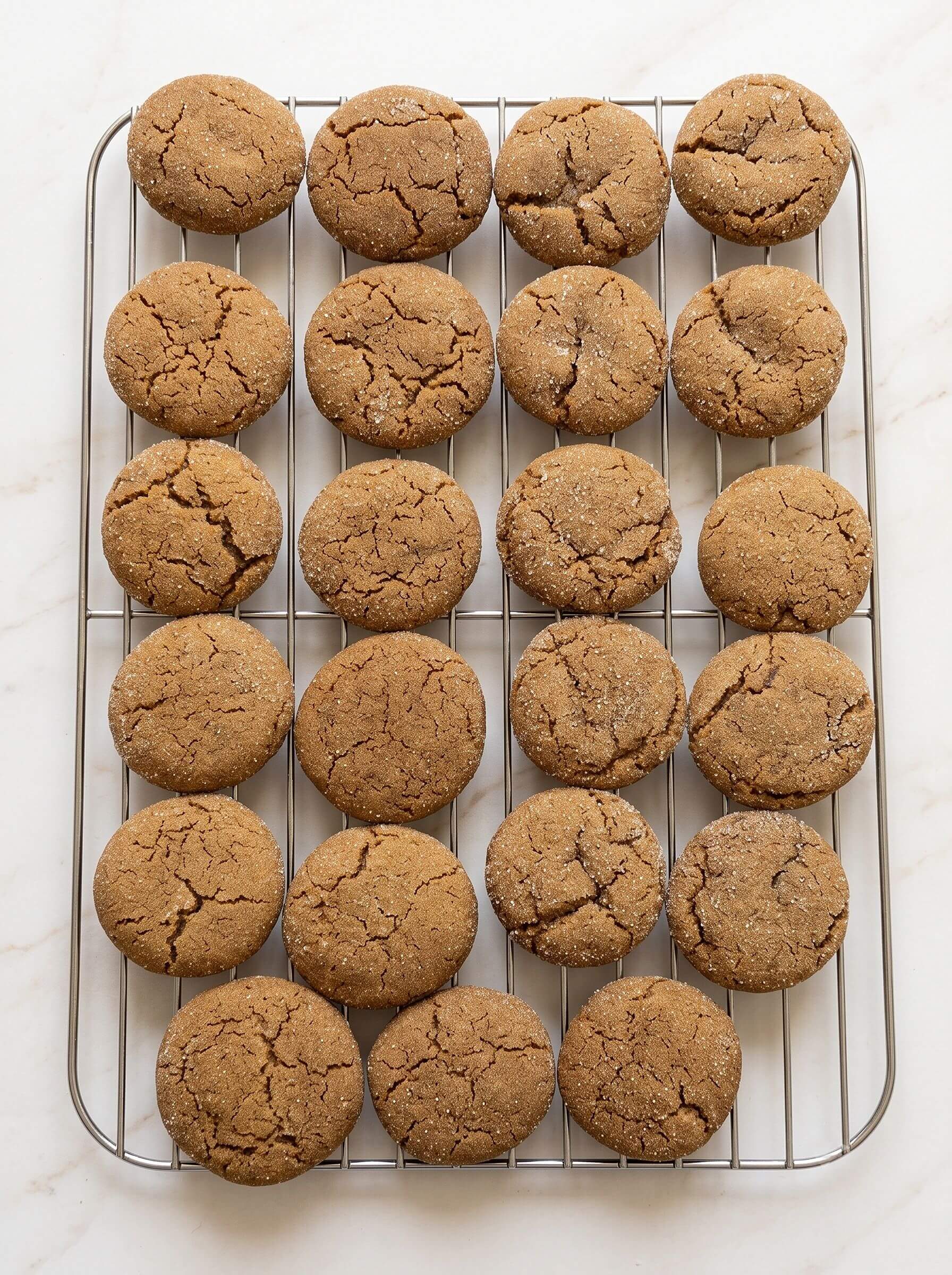
These soft and chewy molasses cookies are the kind of old-fashioned treat that deserves a permanent spot in the holiday cookie tin. They have crisp, sugar-coated edges, tender centers, and those beautiful crackled tops that make homemade spice cookies so inviting. Molasses gives each bite a deep caramel-like sweetness, while cinnamon, cloves, and ginger add a warm, fragrant finish.
This is exactly the sort of collected family recipe I like keeping close because it is simple, dependable, and wonderfully freezer-friendly. The chilled dough is easy to shape, and rolling each cookie in sugar creates just enough sparkle and delicate crunch. They are especially handy during the holidays when I want something that travels well in cookie boxes but still tastes homemade days later.
Serve them with cold milk for the kids or a hot cup of coffee for an afternoon treat.
Love this recipe? Pin it to your Holiday Cookies board on Pinterest so you don’t lose it!
Ingredients
Cookie Dough
¾ cup unsalted butter, melted
1 cup granulated sugar
1 large egg
¼ cup molasses
2 cups all-purpose flour
2 tsp baking soda
1 tsp ground cinnamon
½ tsp kosher salt
½ tsp ground cloves
½ tsp ground ginger
For Rolling
½ cup granulated sugar
Instructions
- Make the wet mixture. In a large mixing bowl, stir the melted butter, 1 cup sugar, and egg together until smooth and evenly blended. Mix in the molasses.
- Combine the dry ingredients. In a separate bowl, whisk together the flour, baking soda, cinnamon, salt, cloves, and ginger.
- Make the dough. Gradually stir the dry ingredients into the molasses mixture just until no dry streaks of flour remain. Cover the bowl and refrigerate for 1 hour.
- Heat the oven. Preheat the oven to 190°C / 375°F. Place the remaining ½ cup sugar in a shallow bowl.
- Shape the cookies. Roll the chilled dough into balls about 1 inch in diameter. Coat each ball completely in sugar, then arrange them about 2 inches apart on ungreased baking sheets.
- Bake. Bake one batch at a time for 8 to 10 minutes, until the cookies have spread and developed crackled tops. For softer centers, avoid waiting until the entire cookie looks firm.
- Cool. Let the cookies rest briefly on the baking sheet so they can set, then transfer them to a wire rack to cool completely.
Cooking Notes
Do not skip chilling the dough. The 1-hour rest firms the butter and makes the sticky molasses dough considerably easier to roll.
For the softest cookies, remove them from the oven when the edges look set but the centers still appear slightly soft. They continue cooking from residual heat after leaving the oven.
Regular or dark molasses works well. Avoid blackstrap molasses unless you specifically want a much stronger, more bitter molasses flavor.
Butter provides a richer flavor, while margarine can be used as in the original family recipe.
For consistent baking, make the dough balls approximately the same size and leave enough room between them to spread.
Nutrition
The recipe makes approximately 60 small cookies, or 30 servings of 2 cookies each. A standard serving is approximately 1½ to 2 oz, depending on the final baked size. Moisture loss during baking reduces the finished weight but does not substantially change the batch’s total calories.
Estimated Nutrition per Serving
Calories: 120 kcal
Fat: 4.8 g
Carb: 18.2 g
Protein: 1.1 g
Nutrition is an estimate and will vary with the brand of butter, molasses, flour, and exact cookie size. The calculated value also closely aligns with the supplied nutrition information of 120 calories per serving.
Recipe Science
Molasses cookies combine a high-sugar, moderately high-fat dough with baking soda and warm spices. Molasses contributes both moisture and the characteristic dark, slightly bittersweet flavor, while melted butter provides richness and encourages spreading. Cinnamon, cloves, and ginger supply aromatic compounds that complement the stronger flavors in molasses.
Chilling is particularly important with melted-butter cookie dough. Cooling allows the fat to firm and gives the flour additional time to hydrate, producing dough that is easier to portion while limiting excessive spreading in the oven. Baking soda promotes browning and helps create the characteristic cracked surface. The exterior sugar coating dries and crystallizes during baking, producing a subtle contrast between the lightly crisp surface and softer interior.
These cookies are well suited to advance preparation because the baked cookies store and freeze effectively. The dough can also be portioned before baking for more convenient small batches. Similar warm baking spices can be adjusted to taste without significantly changing the dough’s structure.
Dietary Notes & Health Alerts: The estimated saturated fat, sodium, and added sugar should be considered in the context of a two-cookie serving. Added sugar is the nutrient most likely to approach or exceed the FDA’s 20% Daily Value threshold of 10 g per serving. For anyone monitoring added sugar intake, serving one cookie rather than two is the simplest way to reduce the amount without altering the recipe.
Why You’ll Love This Recipe
- Soft, Chewy Centers: Careful baking keeps the centers tender while the sugar-coated exterior develops a delicate crust.
- Classic Holiday Flavor: Molasses, cinnamon, ginger, and cloves give the cookies their unmistakably warm, nostalgic aroma.
- Freezer-Friendly: These cookies can be prepared ahead, making holiday baking much easier to manage.
- Perfect for Gifting: The sturdy cookies pack and travel particularly well in tins and cookie boxes.
- Simple Ingredients: Everything comes together with familiar baking staples and straightforward techniques.
FAQ
- Can I freeze molasses cookies? Yes. Cool them completely, then freeze in an airtight container with parchment between layers. Thaw at room temperature before serving.
- Why did my cookies spread too much? Warm dough is usually the culprit. Chill it for the full hour and keep unused dough refrigerated while other batches bake.
- How do I keep molasses cookies soft? Avoid overbaking them and store the cooled cookies in an airtight container. The centers should still look slightly soft when they leave the oven.
- Can I make the dough ahead? Yes. Prepare and refrigerate the covered dough in advance. If it becomes very firm, allow it to sit briefly at room temperature until it is easy enough to scoop and roll.
- Can I use margarine instead of butter? Yes. The original recipe allows either. Butter generally provides a richer dairy flavor, while margarine can slightly change the spread and final texture.
Conclusion
There is something especially comforting about a simple, old-fashioned molasses cookie, and this is one of those recipes worth bringing back every holiday season. Cooking and baking are always a little personal, so adjust the spices, bake them as soft as you like, and make the recipe your own.
What do you like with a warm molasses cookie: coffee, hot cocoa, or a cold glass of milk?
Happy baking, and save a warm one for yourself!

Soft and Chewy Molasses Cookies
Course: Spice CookiesCuisine: AmericanDifficulty: Easy30
servings30
minutes10
minutes120
kcalOld-fashioned molasses cookies with soft centers, crackled sugar-coated tops, and plenty of warm cinnamon, ginger, and clove flavor.
Ingredients
- Cookie Dough
¾ cup unsalted butter, melted
1 cup granulated sugar
1 large egg
¼ cup molasses
2 cups all-purpose flour
2 tsp baking soda
1 tsp ground cinnamon
½ tsp kosher salt
½ tsp ground cloves
½ tsp ground ginger
- For Rolling
½ cup granulated sugar
Directions
- Make the wet mixture. In a large mixing bowl, stir the melted butter, 1 cup sugar, and egg together until smooth and evenly blended. Mix in the molasses.
- Combine the dry ingredients. In a separate bowl, whisk together the flour, baking soda, cinnamon, salt, cloves, and ginger.
- Make the dough. Gradually stir the dry ingredients into the molasses mixture just until no dry streaks of flour remain. Cover the bowl and refrigerate for 1 hour.
- Heat the oven. Preheat the oven to 190°C / 375°F. Place the remaining ½ cup sugar in a shallow bowl.
- Shape the cookies. Roll the chilled dough into balls about 1 inch in diameter. Coat each ball completely in sugar, then arrange them about 2 inches apart on ungreased baking sheets.
- Bake. Bake one batch at a time for 8 to 10 minutes, until the cookies have spread and developed crackled tops. For softer centers, avoid waiting until the entire cookie looks firm.
- Cool. Let the cookies rest briefly on the baking sheet so they can set, then transfer them to a wire rack to cool completely.