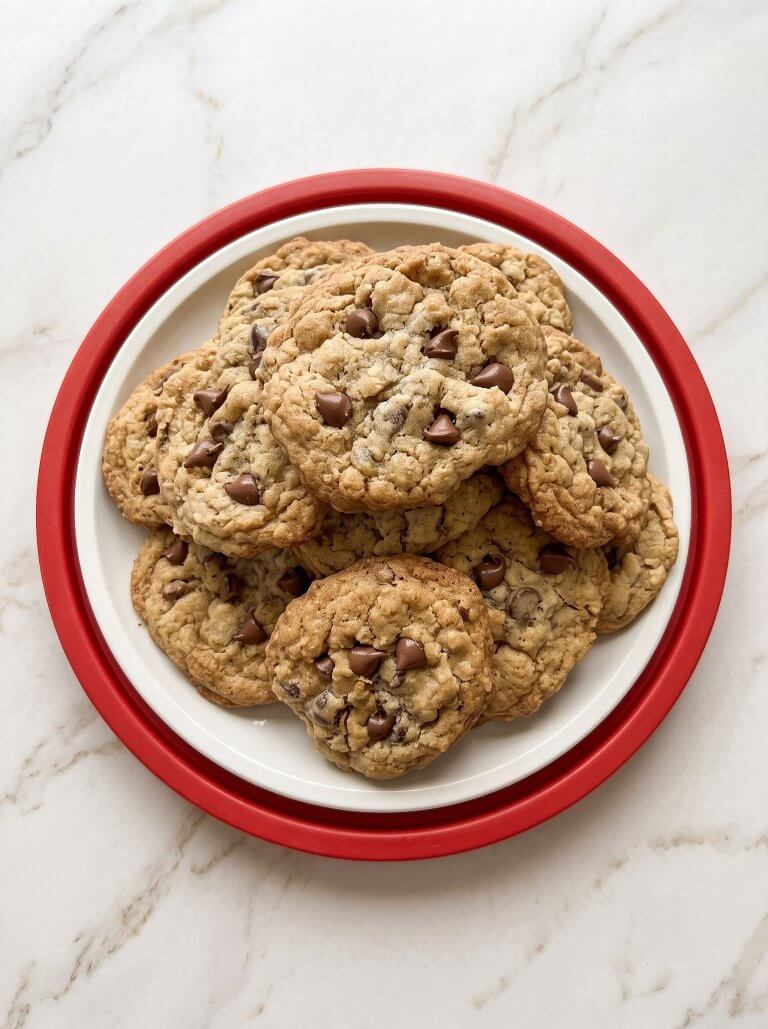
These cake mix chocolate chip cookies are all about soft, chewy texture with very little prep work. Yellow cake mix supplies the flour, sugar, flavoring, and leavening in one convenient ingredient, while butter, eggs, and vanilla turn it into a rich cookie dough packed with semisweet chocolate chips.
What I appreciate most about this collected recipe is how reliably it fits into a busy afternoon. There is no creaming butter and sugar, no measuring several dry ingredients, and no chilling requirement, so you can have a tray in the oven about 10 minutes after you start.
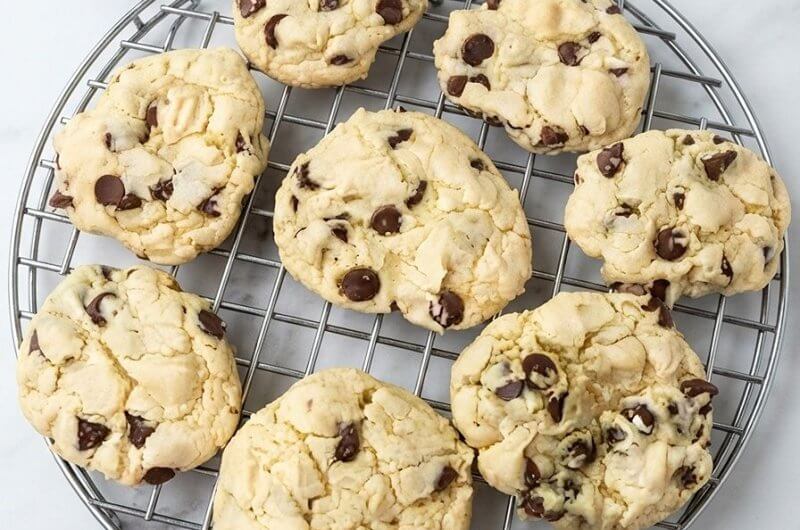
The finished cookies are tender through the middle with slightly firmer, golden edges. The vanilla deepens the buttery cake-mix flavor, while the semisweet chocolate keeps each bite from tasting overly sugary. My kids have always been especially happy with cookies like these because they stay pleasantly soft rather than turning crisp and crumbly after cooling.
They are also useful for bake sales, casual parties, lunchboxes, and last-minute dessert trays because one batch makes about four dozen cookies. Keep an eye on the first tray near the end of baking since oven temperatures and cookie size can change the exact timing.
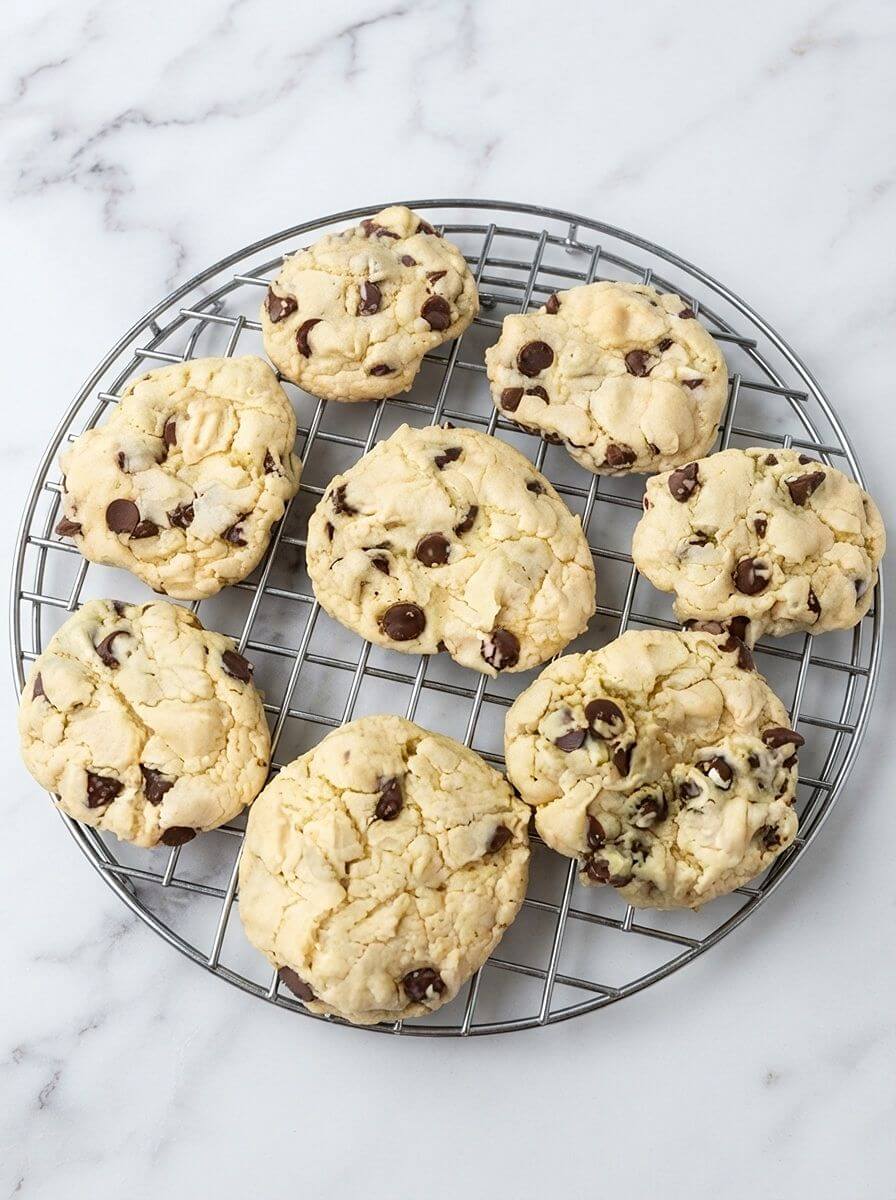
Love this recipe? Pin it to your easy dessert board on Pinterest so you don’t lose it!
Why You’ll Love This Recipe
- Only Five Ingredients: Cake mix takes the place of several separately measured pantry ingredients, keeping preparation quick and simple.
- Soft, Chewy Centers: Butter, eggs, and the cake mix create a tender cookie that stays softer than many traditional chocolate chip cookies.
- Fast to Mix: The dough needs no chilling and can go directly from the mixing bowl to the baking sheet.
- Big-Batch Friendly: One recipe produces about 48 cookies, which is convenient for parties, bake sales, and sharing.
- Plenty of Chocolate: Two full cups of semisweet chocolate chips distribute chocolate throughout nearly every bite.
Key Ingredients & Why
- Yellow Cake Mix: The cake mix provides flour, sugar, leavening, salt, and flavor in a prebalanced combination. Its formulation helps create the recipe’s characteristic soft, cake-like chew.
- Butter: Butter supplies fat for richness and tenderness while also helping the cookies spread as they bake. Using softened rather than melted butter keeps the dough thick enough for rounded portions.
- Eggs: Eggs bind the dough and provide both moisture and structure. Their proteins set during baking so the cookies hold together while remaining tender.
- Vanilla Extract: Vanilla reinforces the buttery, caramel-like flavors of the baked cake mix and chocolate without making the cookies noticeably vanilla flavored.
- Semisweet Chocolate Chips: Semisweet chocolate balances the sweetness of the cake mix with deeper cocoa flavor and stays in distinct pockets rather than disappearing into the dough.
Variations & Substitutions
- Milk Chocolate Version: Replace the semisweet chocolate chips with milk chocolate chips at a 1:1 ratio. Expect a sweeter overall cookie.
- Dark Chocolate Version: Replace the semisweet chips with dark chocolate chips at a 1:1 ratio for a stronger cocoa flavor and slightly less perceived sweetness.
- Chocolate and Nut Cookies: Replace ½ cup of the chocolate chips with ½ cup chopped pecans or walnuts, keeping the total mix-ins at 2 cups so the dough is not overloaded.
- Salted Butter Option: Substitute salted butter for unsalted butter at a 1:1 ratio. Because commercial cake mix already contains sodium, expect a slightly saltier finished cookie.
- White Chocolate Combination: Replace 1 cup of the semisweet chocolate chips with 1 cup white chocolate chips, leaving the other cup semisweet for better sweetness balance.
Equipment Needed
- Large Mixing Bowl: Use a bowl with enough room to combine the thick dough without spilling dry cake mix over the sides.
- Electric Hand Mixer: This helps incorporate the softened butter and eggs evenly into the dry mix. A sturdy stand mixer fitted with the paddle attachment also works.
- Cookie Sheets: Use flat, oven-safe baking sheets that allow enough room between portions for spreading.
- Wire Cooling Rack: Air circulation around the cookies prevents trapped steam from making the bottoms overly soft after they leave the baking sheet.
- Cookie Scoop: A roughly 1-tbsp scoop is useful for making consistently sized cookies (a measuring tablespoon is a practical alternative).
Yield & Exact Sizing
- Total Yield: About 48 cookies, or 4 dozen.
- Portion Size: Scoop approximately 1 rounded tbsp of dough for each cookie.
- Size & Shape: Place dough portions about 2 inches apart. Finished cookies should generally measure about 2 to 2½ inches across, depending on portion size and baking sheet temperature.
- Baking Spread: The dough will spread outward during baking rather than shrink. Consistent portions help the cookies bake at the same rate.
Ingredients
1 (18.25-oz) package yellow cake mix
½ cup butter, softened
2 large eggs
1 tsp vanilla extract
2 cups semisweet chocolate chips
Instructions
- Preheat the oven to 350°F / 175°C. Arrange a rack near the center of the oven and have your cookie sheets ready.
- Combine the cake mix, softened butter, eggs, and vanilla. Beat with an electric mixer just until the ingredients form an evenly blended, thick cookie dough.
- Fold in the chocolate chips. Mix only until the chips are evenly distributed throughout the dough.
- Portion the dough onto the cookie sheets. Drop rounded tablespoonfuls of dough onto the sheets, leaving about 2 inches between cookies so they have room to spread.
- Bake for 11 to 15 minutes. Remove the cookies when the outer edges are lightly golden and the centers are set but still soft.
- Cool briefly on the baking sheets. Leave the cookies in place for several minutes so their structure can firm before transferring them to wire racks.
- Finish cooling on wire racks. Let the cookies cool for about 9 minutes, or until firm enough to handle comfortably.
Visual & Tactile Cues
- After Mixing: The dough should look thick, soft, and cohesive rather than pourable. You should not see dry streaks or pockets of cake mix.
- After Adding Chocolate: The chips should be distributed throughout the dough without excessive mixing or a greasy appearance.
- Before Baking: Each portion should sit as a soft mound on the baking sheet and hold its shape rather than immediately flattening.
- Near the End of Baking: Look for lightly golden edges with centers that appear set but still soft. Do not wait until the entire cookie is deeply browned.
- During Cooling: Freshly baked cookies will feel delicate when they first leave the oven. After several minutes on the pan, they should become firm enough to lift without breaking.
Cooking Notes (Pro Tips)
- Do Not Overbake: These cookies continue setting from residual heat after leaving the oven. Baking until the centers look completely dry can produce firmer cookies than intended.
- Use Properly Softened Butter: The butter should yield when pressed but should not be melted or oily. Melted butter can make the dough looser and encourage excess spreading.
- Keep Portions Consistent: Uneven scoops can leave smaller cookies overdone before larger ones finish baking.
- Cool Before Moving: Give the cookies a few minutes on the hot baking sheet before transferring them. Moving them immediately can cause the soft centers to tear.
Storage & Reheating Guide
- Room Temperature: Store completely cooled cookies in an airtight container for about 3 to 4 days for the best texture.
- Refrigerator: Refrigeration is not necessary for these cookies, but they can be refrigerated airtight for up to about 1 week. Bring them to room temperature before serving for a softer texture.
- Freezer: Freeze cooled cookies in an airtight freezer container or freezer bag for up to 3 months. Separate layers with parchment or wax paper to prevent sticking.
- Thawing: Thaw frozen cookies at room temperature while still loosely covered so they do not dry out.
- Reheating: For a warm-cookie texture, heat individual cookies briefly in a low oven around 300°F / 150°C. A microwave can soften a cookie quickly, but overheating may make the texture rubbery as it cools.
Serving Suggestions
These cookies fit especially well into casual gatherings, after-school snacks, bake sales, and simple family dessert nights.
- Cold Milk: The mild creaminess balances the concentrated sweetness and chocolate while requiring no additional preparation.
- Vanilla Ice Cream: Sandwich a small scoop between two cooled cookies for an easy dessert that combines cold creaminess with soft, chewy cookies.
- Fresh Strawberries: Their bright acidity and fresh flavor make a simple contrast to the rich chocolate and buttery cookie base.
- Coffee or Black Tea: A lightly bitter drink balances the sweetness and makes these cookies an easy afternoon treat for adults.
Nutrition Facts
Estimated Nutrition per Serving
- Calories: 100 kcal
- Fat: 6 g
- Carb: 13 g
- Protein: 1 g
Disclaimer: This nutritional information is an estimate provided by an online calculator and is meant for informational purposes only.
Recipe Science
Cake mix chocolate chip cookies use a prepared yellow cake mix as the dry foundation, combined with butter, eggs, vanilla, and chocolate chips. Unlike a traditional chocolate chip cookie formula in which flour, sugar, salt, and leavening are measured separately, this method relies on the proportions already established in the commercial mix.
During baking, butter melts and allows the dough to spread, while egg proteins coagulate and help the cookie establish its structure. Starches in the cake mix absorb moisture and gelatinize as the dough heats. Sugars contribute tenderness and browning, while the edges lose moisture faster than the center, producing the contrast between lightly golden edges and a softer interior.
The method is particularly practical because it reduces ingredient measuring and eliminates a separate dry-mixing stage. Once baked, limiting exposure to air helps slow moisture loss, which preserves the intended soft texture. Freezing in an airtight package further reduces staling and allows the cookies to be stored substantially longer than they can at room temperature.
Per cookie, the provided nutrition information lists approximately 88 mg sodium, 3 g saturated fat, and 9 g total sugars. That corresponds to roughly 4% of the FDA Daily Value for sodium and 15% for saturated fat. The source does not distinguish added sugar from total sugar, so an added-sugar Daily Value comparison cannot be calculated precisely. None of the stated sodium or saturated-fat values exceeds 20% of the respective Daily Value per cookie.
Frequently Asked Questions
- Why are my cookies spreading too much? Butter that is excessively warm or partially melted can produce a looser dough. Use softened butter that is pliable but still holds its shape.
- Can I make larger cookies? Yes, but larger portions will generally require more baking time. Judge doneness by the lightly golden edges and set center rather than relying only on the original timing.
- Do I need to grease the cookie sheet? The original recipe does not specify greasing. If sticking is a concern with your particular baking sheet, parchment paper provides an easy release without adding extra fat to the bottoms.
- Why does the recipe use an 18.25-oz cake mix when many boxes are different sizes now? The original formula specifically calls for an 18.25-oz package. A substantially smaller box changes the ratio of dry ingredients to butter and eggs, so identical results cannot be guaranteed without adjusting the recipe.
- How can I make these outside the United States? Look for a boxed vanilla or yellow cake mix with a weight close to 18.25 oz, or about 517 g. Choose a standard cake mix rather than a specialty sponge or angel-food mix, since their formulations and preparation requirements differ.
- Can I mix the dough by hand? The original method uses an electric mixer because the dough is thick. Hand mixing is possible with a sturdy utensil and very soft butter, but it will require more effort to incorporate the cake mix evenly.
Conclusion
These soft cake mix chocolate chip cookies are a wonderful reminder that homemade baking does not have to involve a long ingredient list to feel special. Cooking is always a journey, so once you know how the basic recipe behaves, feel free to make small flavor changes that suit your family.
What kind of chocolate chips would you put in your batch?
Happy cooking, friend!
Soft and Chewy Cake Mix Chocolate Chip Cookies
Course: Cake Mix CookiesCuisine: AmericanDifficulty: Easy48
cookies10
minutes10
minutes10
kcalThese easy chocolate chip cookies use yellow cake mix for a soft, tender center with lightly golden edges. The dough comes together in minutes with just five ingredients, making them especially handy when you want homemade cookies without measuring flour, sugar, or leavening.
Ingredients
1 (18.25-oz) package yellow cake mix
½ cup butter, softened
2 large eggs
1 tsp vanilla extract
2 cups semisweet chocolate chips
Directions
- Preheat the oven to 350°F / 175°C. Arrange a rack near the center of the oven and have your cookie sheets ready.
- Combine the cake mix, softened butter, eggs, and vanilla. Beat with an electric mixer just until the ingredients form an evenly blended, thick cookie dough.
- Fold in the chocolate chips. Mix only until the chips are evenly distributed throughout the dough.
- Portion the dough onto the cookie sheets. Drop rounded tablespoonfuls of dough onto the sheets, leaving about 2 inches between cookies so they have room to spread.
- Bake for 11 to 15 minutes. Remove the cookies when the outer edges are lightly golden and the centers are set but still soft.
- Cool briefly on the baking sheets. Leave the cookies in place for several minutes so their structure can firm before transferring them to wire racks.
- Finish cooling on wire racks. Let the cookies cool for about 9 minutes, or until firm enough to handle comfortably.