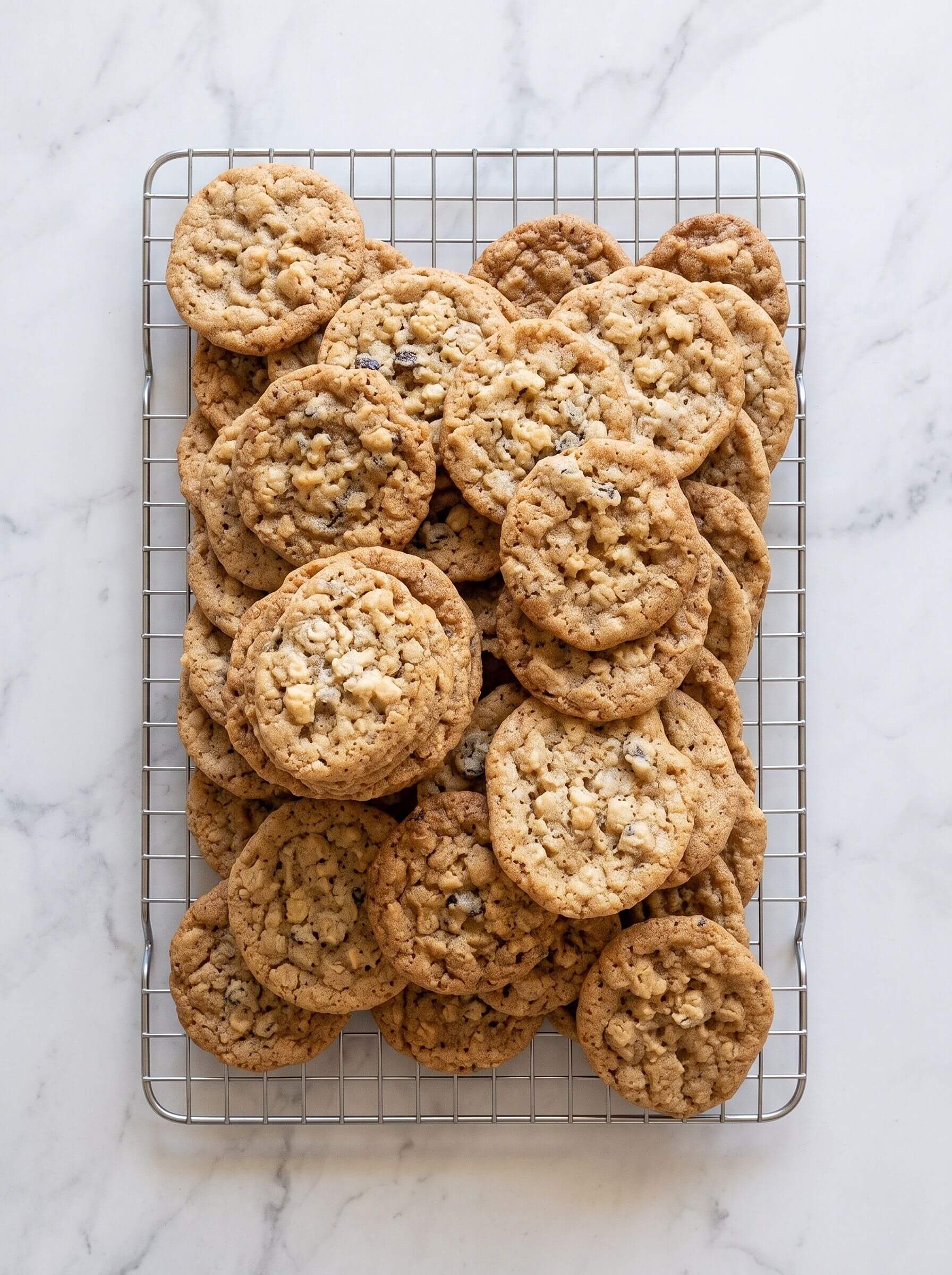
These Lacy Oatmeal Cookies are the kind of old-fashioned treat that looks almost too delicate to be homemade. They bake into thin, crisp rounds with caramelized golden edges and a light, buttery oat flavor. As the dough spreads in the oven, the sugar and butter create that signature lace-like pattern, giving every cookie a wonderfully fragile crunch.
I especially like these when I want something a little more interesting than a standard oatmeal cookie. They are lovely alongside vanilla ice cream, but they can also be shaped while warm into little tubes or curved shells. Once completely cool, a dip or drizzle of melted chocolate turns them into an easy dessert that looks surprisingly elegant.
The biggest trick is simply giving the cookies plenty of room to spread and allowing them to cool before peeling them from the foil. Once you get the rhythm of the first batch, the rest go quickly.
Love this recipe? Pin it to your Cookie Recipes board on Pinterest so you don’t lose it!
Ingredients
1 cup quick-cooking oats
¼ cup all-purpose flour
½ tsp salt
1½ tsp baking powder
1 cup granulated sugar
½ cup unsalted butter, softened
1 large egg
1 tsp vanilla extract
Nonstick cooking spray, as needed
Instructions
- Prepare the oven. Preheat the oven to 165°C / 325°F. Line baking sheets with aluminum foil, then lightly and evenly coat the foil with nonstick cooking spray.
- Combine the dry ingredients. Stir the oats, flour, salt, and baking powder together in a medium bowl until evenly distributed.
- Cream the butter and sugar. In a large bowl, beat the softened butter and granulated sugar until light and fluffy.
- Add the wet ingredients. Beat in the egg and vanilla until the mixture is smooth and well combined.
- Finish the dough. Add the oat mixture to the butter mixture. Stir just until everything is incorporated; avoid overmixing.
- Portion generously apart. Drop small teaspoonfuls of dough onto the prepared baking sheets, leaving about 2½ inches between each cookie. These cookies spread significantly.
- Bake until golden. Bake for 10-12 minutes, or until the cookies have spread thin and the outer edges are golden brown.
- Cool before removing. Leave the cookies on the baking sheet for about 10-15 minutes. Once they have firmed, carefully peel each cookie away from the foil.
- Repeat. Lightly spray the foil again before baking subsequent batches to prevent sticking.
Cooking Notes
The dough needs plenty of space. Crowding the baking sheet can cause neighboring cookies to spread into one another.
Watch the edges rather than relying exclusively on the timer. The cookies are ready when the edges become noticeably golden while the centers still look delicate.
Do not try to peel the cookies from the foil immediately. Fresh from the oven, they are extremely soft and can tear. Cooling allows the caramelized sugar and butter to firm into a crisp cookie.
For decorative cookie tubes, loosen and roll the cookies while they are still warm and flexible, rather than waiting until completely cool.
Old-fashioned rolled oats can make these cookies somewhat thicker and more textured. Quick-cooking oats are preferable for the characteristic delicate lace.
Salted butter can replace unsalted butter; if using it, reduce the added salt slightly.
Nutrition
Yields: 48 cookies
A practical serving is 1 cookie. The finished batch is approximately 48 thin cookies, although exact yield depends on how generously the teaspoonfuls are portioned.
Estimated Nutrition per Serving
- Calories: 44 kcal
- Fat: 2.1 g
- Carb: 6.1 g
- Protein: 0.5 g
Nutrition is an estimate and can vary with butter brand, cookie size, and the amount of cooking spray used.
Recipe Science
Lacy oatmeal cookies rely on a deliberately high proportion of sugar and butter compared with flour and oats. With relatively little flour available to build structure, the dough spreads extensively as the butter melts. Quick-cooking oats provide texture without preventing that spread, while the egg and small quantity of flour give the finished cookies just enough structure to hold together.
During approximately 10-12 minutes of baking, moisture evaporates while the sugar and butter produce a thin, crisp structure. Browning around the edges contributes caramel-like flavors and signals that the cookie has developed enough structure to become crisp after cooling. The cookies remain fragile immediately after baking because the melted sugars have not yet set.
These cookies store best in an airtight container at room temperature once completely cooled. Humidity can soften their crisp texture. They can also be paired with ice cream, shaped while warm, or finished with chocolate, making one basic dough useful for several desserts.
Dietary Notes & Health Alerts: At roughly 44 calories per cookie, a single-cookie serving does not reach the FDA’s 20% Daily Value threshold for saturated fat, sodium, or added sugar. Larger portions increase these values quickly, particularly added sugar and saturated fat, so serving size should be considered when comparing the cookies with daily nutrition goals.
Why You’ll Love This Recipe
- Irresistibly Crisp: These aren’t thick, chewy oatmeal cookies; they’re delicate, buttery, and wonderfully crunchy.
- Simple Pantry Ingredients: Oats, flour, butter, sugar, egg, and vanilla do most of the work.
- Beautiful Without Fuss: The natural spreading creates an intricate lace pattern without special decorating skills.
- Dessert-Friendly: Serve them with ice cream, shape them while warm, or dip the cooled cookies in chocolate.
- Great for Baking Ahead: Once thoroughly cooled, they can be stored in an airtight container for an easy sweet treat.
FAQ
- Why did my cookies spread so much? That’s exactly what they’re supposed to do. Lacy cookies contain relatively little flour, so dramatic spreading produces their characteristic thin texture.
- Why are my cookies sticking to the foil? Make sure the foil is evenly coated with nonstick spray and give the cookies adequate cooling time. Trying to remove them while very hot can cause them to tear.
- Can I use rolled oats instead of quick-cooking oats? You can, but the cookies may be thicker and more textured. Quick-cooking oats give the most delicate result.
- How do I make cookie tubes? When the baked cookies are firm enough to lift but still warm and flexible, gently roll them around the handle of a wooden spoon or another heat-safe cylindrical utensil. Let them cool in that shape.
- Can I add chocolate? Absolutely. Cool the cookies completely, then dip an edge in melted chocolate or drizzle chocolate over the tops. Allow the chocolate to set before storing.
Conclusion
These lacy oatmeal cookies prove that a handful of everyday ingredients can become something wonderfully special. Don’t worry if every cookie isn’t perfectly round; part of the fun of home baking is making a collected recipe work beautifully in your own kitchen.
Would you serve yours alongside ice cream, or dip those crispy edges in chocolate? Happy baking, friends!

Lacy Oatmeal Cookies
Course: Oatmeal CookiesCuisine: AmericanDifficulty: Easy48
cookies15
minutes12
minutes44
kcalDelicate, buttery oatmeal cookies that spread into thin, crisp, caramelized lace with beautifully golden edges.
Ingredients
1 cup quick-cooking oats
¼ cup all-purpose flour
½ tsp salt
1½ tsp baking powder
1 cup granulated sugar
½ cup unsalted butter, softened
1 large egg
1 tsp vanilla extract
Nonstick cooking spray, as needed
Directions
- Prepare the oven. Preheat the oven to 165°C / 325°F. Line baking sheets with aluminum foil, then lightly and evenly coat the foil with nonstick cooking spray.
- Combine the dry ingredients. Stir the oats, flour, salt, and baking powder together in a medium bowl until evenly distributed.
- Cream the butter and sugar. In a large bowl, beat the softened butter and granulated sugar until light and fluffy.
- Add the wet ingredients. Beat in the egg and vanilla until the mixture is smooth and well combined.
- Finish the dough. Add the oat mixture to the butter mixture. Stir just until everything is incorporated; avoid overmixing.
- Portion generously apart. Drop small teaspoonfuls of dough onto the prepared baking sheets, leaving about 2½ inches between each cookie. These cookies spread significantly.
- Bake until golden. Bake for 10-12 minutes, or until the cookies have spread thin and the outer edges are golden brown.
- Cool before removing. Leave the cookies on the baking sheet for about 10-15 minutes. Once they have firmed, carefully peel each cookie away from the foil.
- Repeat. Lightly spray the foil again before baking subsequent batches to prevent sticking.