Description
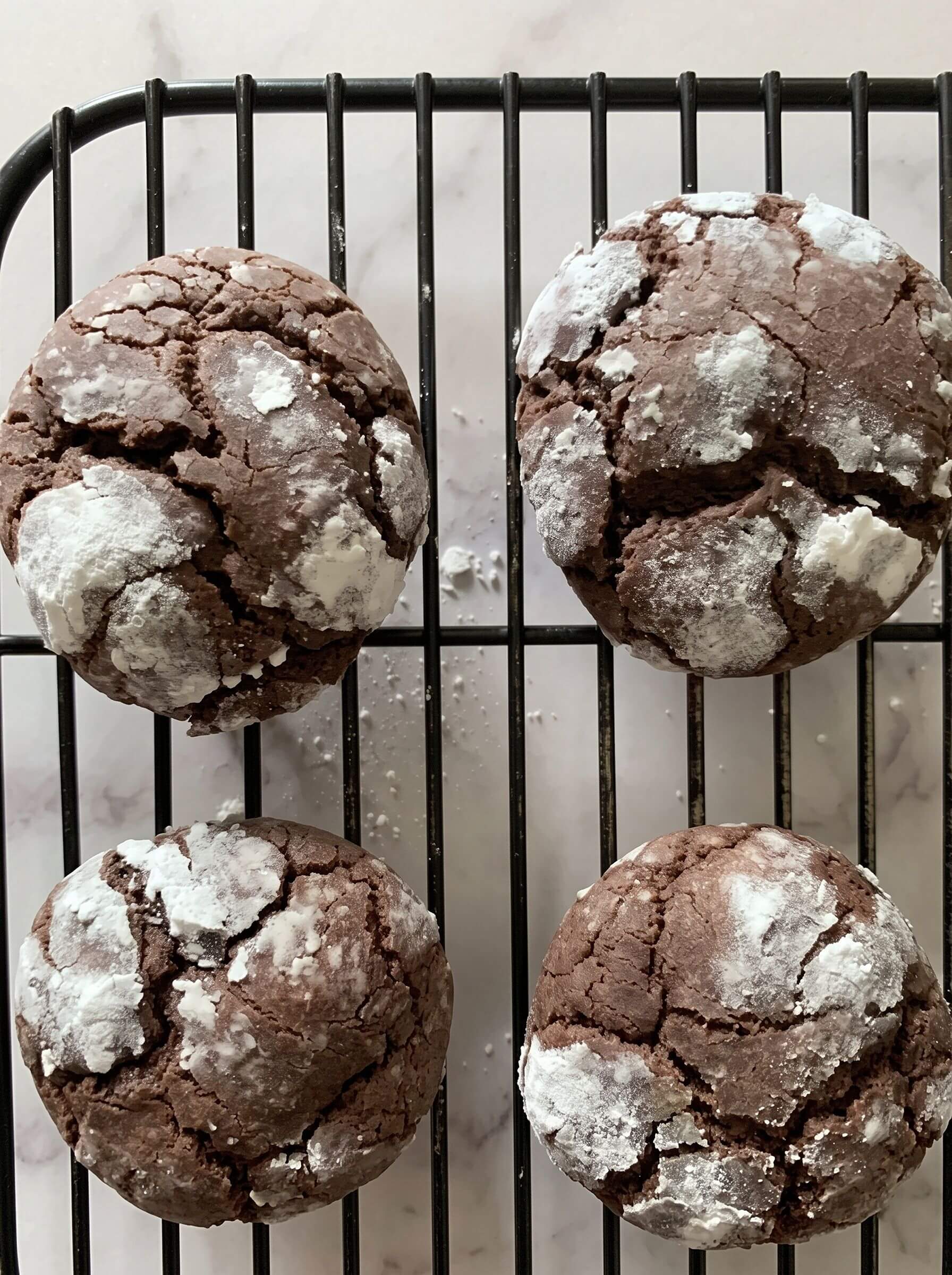
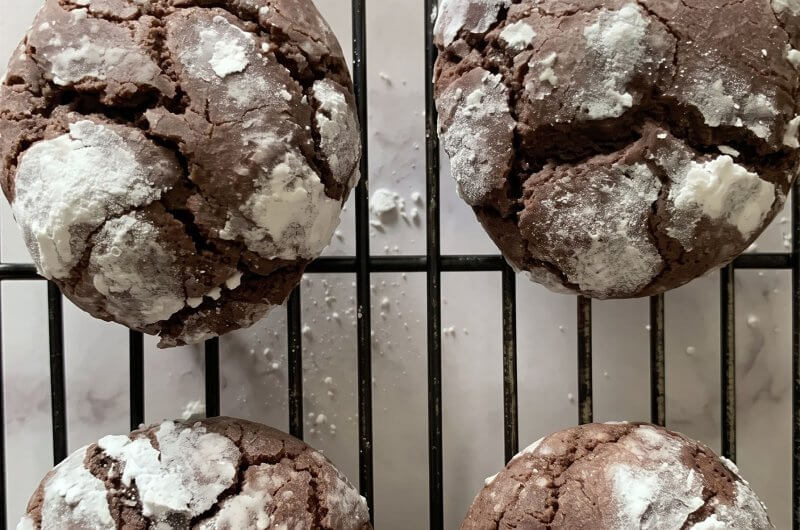
These Earthquake Cookies are the kind of old-school cake mix cookie that earns a permanent place in the recipe box. Devil’s food cake mix gives them a deep chocolate flavor, while shortening keeps the centers soft and tender. A generous coating of confectioners’ sugar creates those dramatic white cracks as the cookies spread in the oven, giving each one its signature earthquake look.
I especially like this recipe because the dough comes together with a spoon, so there is no mixer and very little cleanup. The hour-long chill is important; it firms up the sticky chocolate dough so it can be rolled easily and helps the confectioners’ sugar stay visible instead of disappearing during baking. These are easy enough for a weekday baking project but festive enough for cookie trays and holiday boxes.
Love this recipe? Pin it to your Chocolate Cookies board on Pinterest so you don’t lose it!
Ingredients
1 (15.25 oz) package devil’s food cake mix
2 large eggs
½ cup shortening
1 tbsp water
¾ cup confectioners’ sugar
Instructions
- Make the dough. Add the devil’s food cake mix, eggs, shortening, and water to a medium bowl. Stir thoroughly with a sturdy spoon until no dry patches of cake mix remain.
- Chill. Cover the bowl and refrigerate the dough for 1 hour. This makes the soft dough much easier to shape.
- Prepare the oven. Preheat the oven to 190°C / 375°F. Line baking sheets with parchment paper or leave them ungreased if your baking sheets release cookies well.
- Shape the cookies. Place the confectioners’ sugar in a shallow bowl. Scoop the chilled dough into small balls, then generously roll each ball in the sugar until completely coated.
- Arrange. Set the coated dough balls on the prepared baking sheets, leaving about 2 inches between them to allow for spreading.
- Bake. Bake for 8-10 minutes, until the cookies have spread, developed pronounced cracks, and appear set around the edges.
- Cool. Let the cookies rest briefly on the baking sheet before transferring them to a wire rack. Avoid overbaking; the centers will continue to set as they cool.
Cooking Notes
Chill the full hour: Warm cake mix dough is sticky and difficult to roll. Proper chilling also encourages a more defined crackled surface.
Use plenty of confectioners’ sugar: A thick coating produces the strongest white-and-chocolate contrast after baking.
Watch the centers: Do not wait until the entire cookie looks dry. Removing the cookies when the edges are set but the centers remain soft helps preserve their chewy texture.
Change the flavor: The original recipe specifically allows other cake mix flavors, making the basic technique easy to adapt.
Storage: Once completely cool, keep the cookies in an airtight container at room temperature for about 3-4 days. They can also be frozen for longer storage.
Nutrition
The original recipe lists 125 calories per cookie, with 4 dozen cookies in the batch. Because the stated serving count is 24, one serving is approximately 2 cookies. The estimates below therefore use two cookies as the practical serving size.
Yields: 24 servings, about 2 cookies per serving
Estimated Nutrition per Serving
- Calories: 249 kcal
- Fat: 10.0 g
- Carb: 36.0 g
- Protein: 2.0 g
Actual values can vary with the specific brand and flavor of cake mix and shortening used.

Recipe Science
Earthquake cookies are essentially cake mix cookies engineered to develop a crinkled exterior. The prepared cake mix supplies flour, sugar, cocoa, leavening, and other ingredients in a convenient base. Eggs provide moisture, protein, and structure, while shortening supplies fat without adding additional water. The confectioners’ sugar coating provides the distinctive pale surface.
As the chilled dough heats, the fat softens, the dough spreads, and the leavening expands the cookie. The exterior begins setting while expansion continues underneath, causing the surface to separate into irregular cracks. The dark chocolate dough showing through the white confectioners’ sugar makes those cracks particularly visible. Chilling before shaping also reduces stickiness and helps control early spreading.
For everyday use, the dough is straightforward because it requires few ingredients and no complicated mixing technique. Completely cooled cookies can be stored airtight at room temperature and generally reheat well with just a few seconds in the microwave if a softer texture is preferred. Other cake mix flavors can be substituted, although spreading, color, and sweetness may vary.
Dietary Notes & Health Alerts: Based on the supplied nutrition information, two cookies contain approximately 274 mg sodium, about 12% of the FDA Daily Value of 2,300 mg. The supplied data indicates roughly 4 g saturated fat, or 20% of the 20 g Daily Value. That reaches the threshold where saturated fat deserves attention, particularly if several servings are eaten. Added sugar cannot be accurately determined from the supplied nutrition panel because it reports total sugars rather than added sugars. Portioning the batch into smaller cookies or enjoying one cookie rather than two reduces calories, saturated fat, and sugar proportionally.
Why You’ll Love This Recipe
- Five Simple Ingredients: A boxed cake mix does most of the measuring for you, making these cookies especially approachable.
- Beautiful Crackled Finish: Confectioners’ sugar creates an impressive earthquake pattern with almost no decorating work.
- Rich Chocolate Flavor: Devil’s food cake mix delivers plenty of cocoa flavor without requiring a long ingredient list.
- No Mixer Required: Everything can be stirred together in one bowl with a spoon.
- Easy to Customize: Changing the cake mix flavor gives you a simple way to create entirely different variations from the same method.
FAQ
- Why didn’t my cookies crack? Make sure the dough is thoroughly chilled and coat each ball generously with confectioners’ sugar. Insufficient coating makes the cracks much less noticeable.
- Can I use butter instead of shortening? You can experiment with an equal amount, but butter contains water and melts differently, so the cookies may spread more and have a slightly different texture.
- Can I make the dough ahead? Yes. Keep it well covered in the refrigerator, then shape and coat the cookies shortly before baking.
- How do I know when they’re done? Look for set edges and well-developed cracks. The centers should still seem slightly soft when the cookies leave the oven.
- Can I use another cake mix flavor? Yes. Chocolate is classic, but the same basic method can be used with other cake mix flavors for different colors and flavor combinations.
Conclusion
These Easy Chocolate Earthquake Cookies prove that a short ingredient list can still turn into something wonderfully fun and satisfying. Baking is a journey, so don’t hesitate to experiment with different cake mix flavors and make this collected favorite your own.
What cake mix flavor would you try for your next batch? Happy baking, and enjoy every crackly chocolate bite!
Earthquake Cookies
Course: Cake Mix CookiesCuisine: AmericanDifficulty: Easy24
servings10
minutes10
minutes249
kcalSoft devil’s food cake mix cookies rolled in confectioners’ sugar and baked until beautifully crackled.
Ingredients
1 (15.25 oz) package devil’s food cake mix
2 large eggs
½ cup shortening
1 tbsp water
¾ cup confectioners’ sugar
Directions
- Make the dough. Add the devil’s food cake mix, eggs, shortening, and water to a medium bowl. Stir thoroughly with a sturdy spoon until no dry patches of cake mix remain.
- Chill. Cover the bowl and refrigerate the dough for 1 hour. This makes the soft dough much easier to shape.
- Prepare the oven. Preheat the oven to 190°C / 375°F. Line baking sheets with parchment paper or leave them ungreased if your baking sheets release cookies well.
- Shape the cookies. Place the confectioners’ sugar in a shallow bowl. Scoop the chilled dough into small balls, then generously roll each ball in the sugar until completely coated.
- Arrange. Set the coated dough balls on the prepared baking sheets, leaving about 2 inches between them to allow for spreading.
- Bake. Bake for 8-10 minutes, until the cookies have spread, developed pronounced cracks, and appear set around the edges.
- Cool. Let the cookies rest briefly on the baking sheet before transferring them to a wire rack. Avoid overbaking; the centers will continue to set as they cool.