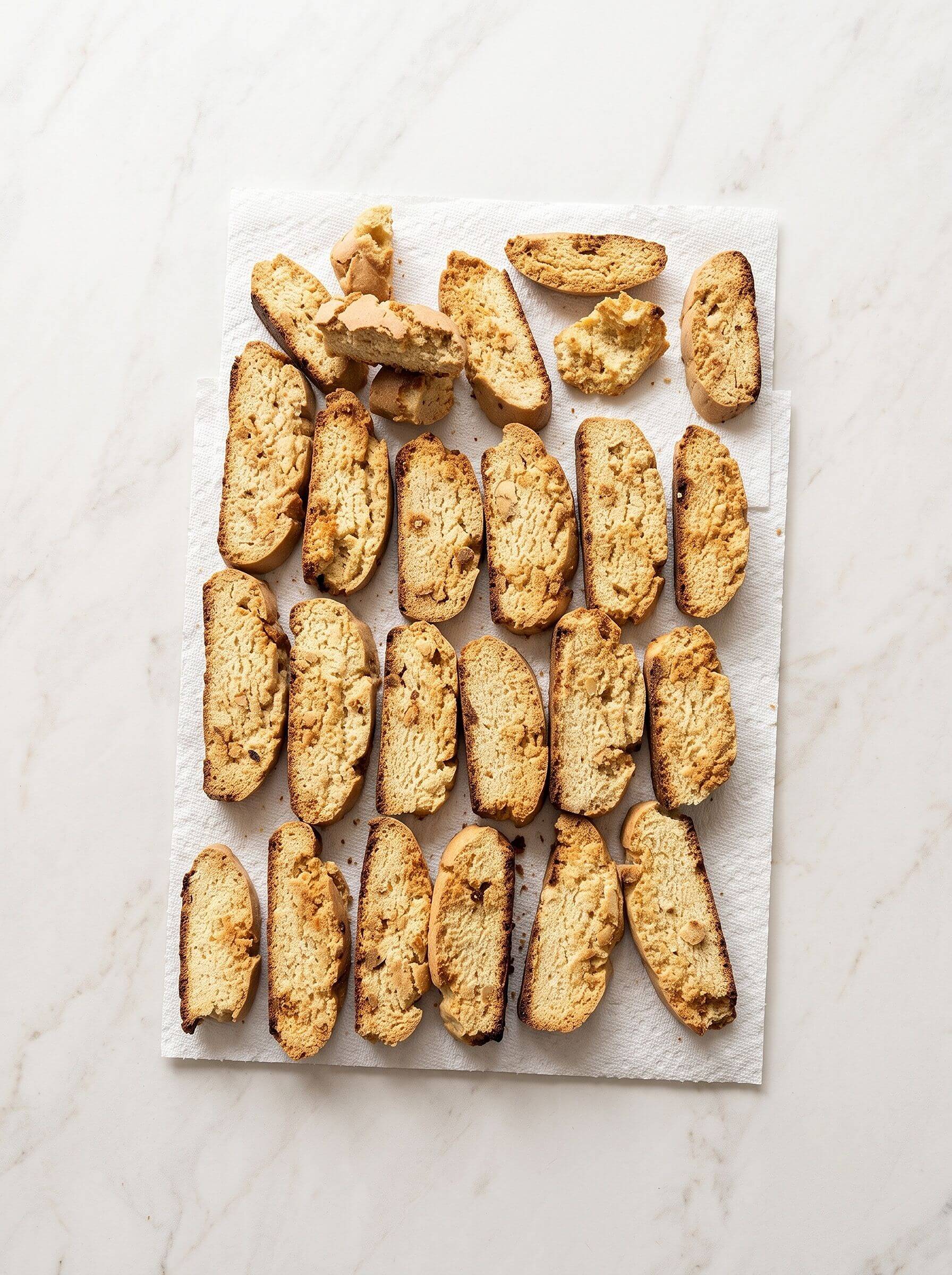
These classic anise biscotti are the kind of old-school Italian cookie recipe worth keeping close. They bake up crisp, lightly sweet, and wonderfully fragrant, with a clean anise flavor that pairs especially well with hot coffee, espresso, or tea. The vegetable oil keeps the dough simple to mix, while the traditional twice-baked method gives each cookie its signature dry, crunchy texture.
I especially appreciate that this collected recipe doesn’t rely on butter, nuts, or complicated shaping. The dough comes together quickly, gets formed into two logs, and is baked once before slicing and toasting again. A serrated knife makes a noticeable difference when cutting the warm logs; a gentle sawing motion helps produce neat slices without crushing them.
For holidays, I like the original suggestion of dipping the cooled ends in melted chocolate and adding sprinkles. For everyday snacking, they’re lovely exactly as they are.
Love this recipe? Pin it to your Italian Cookies or Holiday Baking board on Pinterest so you don’t lose it!
Ingredients
1 cup granulated sugar
½ cup vegetable oil
3 large eggs
1 tbsp anise extract, or 3 drops anise oil
3¼ cups all-purpose flour
1 tbsp baking powder
Instructions
- Prepare the oven and pans. Preheat the oven to 190°C / 375°F. Line two baking sheets with parchment paper or lightly grease them.
- Mix the wet ingredients. In a large bowl, beat the sugar, vegetable oil, eggs, and anise extract until smooth and thoroughly combined.
- Make the dough. In a separate bowl, whisk together the flour and baking powder. Gradually stir the dry ingredients into the egg mixture. The finished dough should be thick and fairly stiff.
- Shape the logs. Divide the dough evenly in half. Shape each portion into a long log on a prepared baking sheet, then gently flatten each log to about ½ inch thick.
- First bake. Bake at 190°C / 375°F for 25 to 30 minutes, or until the logs are lightly golden and set.
- Cool before slicing. Transfer the baked logs to wire racks and cool for about 15 minutes, just until they’re comfortable to handle.
- Slice. Using a serrated knife and a gentle sawing motion, cut each log crosswise into approximately 18 slices, each about ½ inch thick.
- Second bake. Arrange the biscotti cut-side up on the baking sheets. Return them to the 190°C / 375°F oven for 6 to 10 minutes. Turn each cookie over and bake another 6 to 10 minutes, until lightly toasted and crisp.
- Cool. Transfer the biscotti to wire racks and let them cool completely. They will become crisper as they cool.
Cooking Notes
A serrated bread knife is ideal for slicing the partially baked logs. Use a slow sawing motion rather than pressing straight down, which can crack or crush the cookies.
Don’t skip the short cooling period after the first bake. Cutting the logs immediately makes them fragile, while letting them cool completely can make them harder to slice cleanly.
For slightly softer biscotti, shorten the second bake. For very crisp cookies intended for dunking, bake toward the longer end of the range, watching carefully for excessive browning.
Anise oil is substantially more concentrated than extract, so use only the small amount specified.
For a festive variation, dip one end of each completely cooled biscotti into melted chocolate and finish with sprinkles.
Nutrition
The recipe yields approximately 36 biscotti, with one biscotti representing one serving. The dough weighs roughly 3½ lb before baking; moisture lost primarily from the eggs during the two baking stages reduces the finished weight. Because flour, sugar, and oil retain nearly all of their calories during baking, cooking-weight loss changes the cookie’s weight but not the batch’s total energy appreciably.
Estimated Nutrition per Serving
- Calories: 97 kcal
- Fat: 3.6 g
- Carb: 14.7 g
- Protein: 1.7 g
Nutrition is an estimate and can vary with flour measurement, egg size, oil retention, and the exact size of each biscotti.
Recipe Science
Biscotti develop their characteristic texture through two separate baking periods. The first bake cooks the egg-and-flour dough as intact logs, allowing the proteins and starches to establish enough structure for slicing. Baking powder provides modest leavening, while the eggs contribute moisture, protein, and binding. Vegetable oil supplies fat without introducing the additional water found in butter.
During the second bake, exposing the sliced surfaces allows moisture to escape much more efficiently. This dehydration rather than heavy browning is largely responsible for biscotti’s crisp, firm texture and long keeping quality. The concentrated anise flavor is particularly suitable because its aromatic character remains noticeable in a relatively dry, mildly sweet cookie.
For storage, completely cooled biscotti can be kept in a tightly sealed container at room temperature. If they soften from humidity, a brief return to a low oven can restore some crispness. Chocolate dipping is optional and changes both storage characteristics and nutrition.
Dietary Notes & Health Alerts: Based on the core recipe and a 36-cookie yield, saturated fat, sodium, and added sugar remain below the FDA’s 20% Daily Value threshold per serving. One cookie therefore would not ordinarily be classified as “High” in these nutrients. Portion size still matters; several cookies eaten together proportionally increase sugar, calories, and other nutrients.
Why You’ll Love This Recipe
- Simple Pantry Ingredients: The dough uses just six ingredients, with no butter, nuts, or specialty baking equipment required.
- Classic Crunch: A second trip through the oven creates that unmistakably crisp biscotti texture made for dunking.
- Fragrant Anise Flavor: Anise gives these otherwise simple cookies a distinctive traditional character.
- Great for Gifting: The cookies travel well, and chocolate-dipped biscotti can easily be dressed up for holidays.
- Big Batch: One recipe produces about 36 cookies, making it practical for parties, cookie trays, and sharing.
FAQ
- Can I make biscotti without anise? Yes. Vanilla, almond, or another baking extract can be substituted, although the finished cookies will have a different flavor profile.
- Why did my biscotti crumble while slicing? The logs may have been too hot, or the knife may have compressed them. Cool for about 15 minutes, then use a sharp serrated knife with a gentle sawing motion.
- Why aren’t my biscotti crunchy? They probably need more time during the second bake. Toast both cut sides and remember that biscotti continue to firm as they cool.
- Can I make them ahead? Absolutely. Their low final moisture content makes biscotti particularly well suited to advance baking. Cool them completely before transferring them to an airtight container.
- Can I add chocolate? Yes. Let the cookies cool completely before dipping the ends in melted chocolate. Allow the coating to set before storing.
Conclusion
There’s something wonderfully comforting about a simple recipe that doesn’t need much fuss to earn a permanent place in the cookie tin. These fragrant, crunchy biscotti are easy to make your own, so don’t be afraid to adjust the flavoring or add a little chocolate when the occasion calls for it.
What do you like to dunk your biscotti in; coffee, espresso, tea, or something else? Happy baking, friends!

Classic Italian Anise Biscotti
Course: Christmas CookiesCuisine: AmericanDifficulty: Easy36
biscotti15
minutes40
minutes97
kcalCrisp, twice-baked Italian cookies with a lightly sweet flavor and fragrant anise finish; perfect for dipping into coffee or tea.
Ingredients
1 cup granulated sugar
½ cup vegetable oil
3 large eggs
1 tbsp anise extract, or 3 drops anise oil
3¼ cups all-purpose flour
1 tbsp baking powder
Directions
- Prepare the oven and pans. Preheat the oven to 190°C / 375°F. Line two baking sheets with parchment paper or lightly grease them.
- Mix the wet ingredients. In a large bowl, beat the sugar, vegetable oil, eggs, and anise extract until smooth and thoroughly combined.
- Make the dough. In a separate bowl, whisk together the flour and baking powder. Gradually stir the dry ingredients into the egg mixture. The finished dough should be thick and fairly stiff.
- Shape the logs. Divide the dough evenly in half. Shape each portion into a long log on a prepared baking sheet, then gently flatten each log to about ½ inch thick.
- First bake. Bake at 190°C / 375°F for 25 to 30 minutes, or until the logs are lightly golden and set.
- Cool before slicing. Transfer the baked logs to wire racks and cool for about 15 minutes, just until they’re comfortable to handle.
- Slice. Using a serrated knife and a gentle sawing motion, cut each log crosswise into approximately 18 slices, each about ½ inch thick.
- Second bake. Arrange the biscotti cut-side up on the baking sheets. Return them to the 190°C / 375°F oven for 6 to 10 minutes. Turn each cookie over and bake another 6 to 10 minutes, until lightly toasted and crisp.
- Cool. Transfer the biscotti to wire racks and let them cool completely. They will become crisper as they cool.