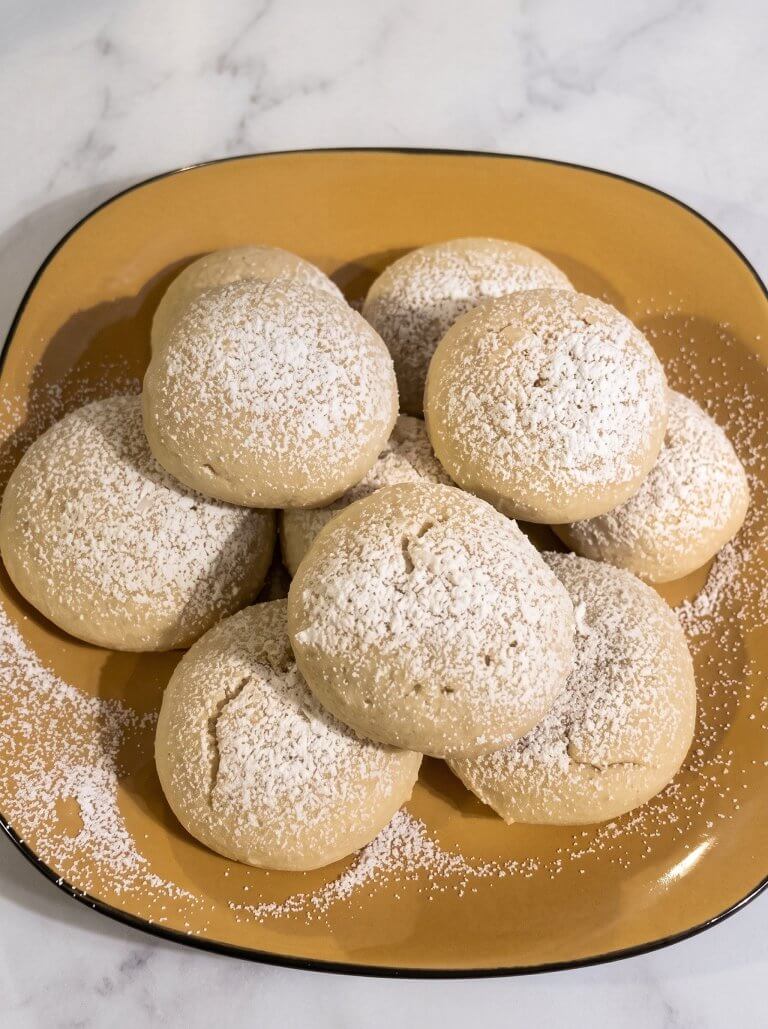
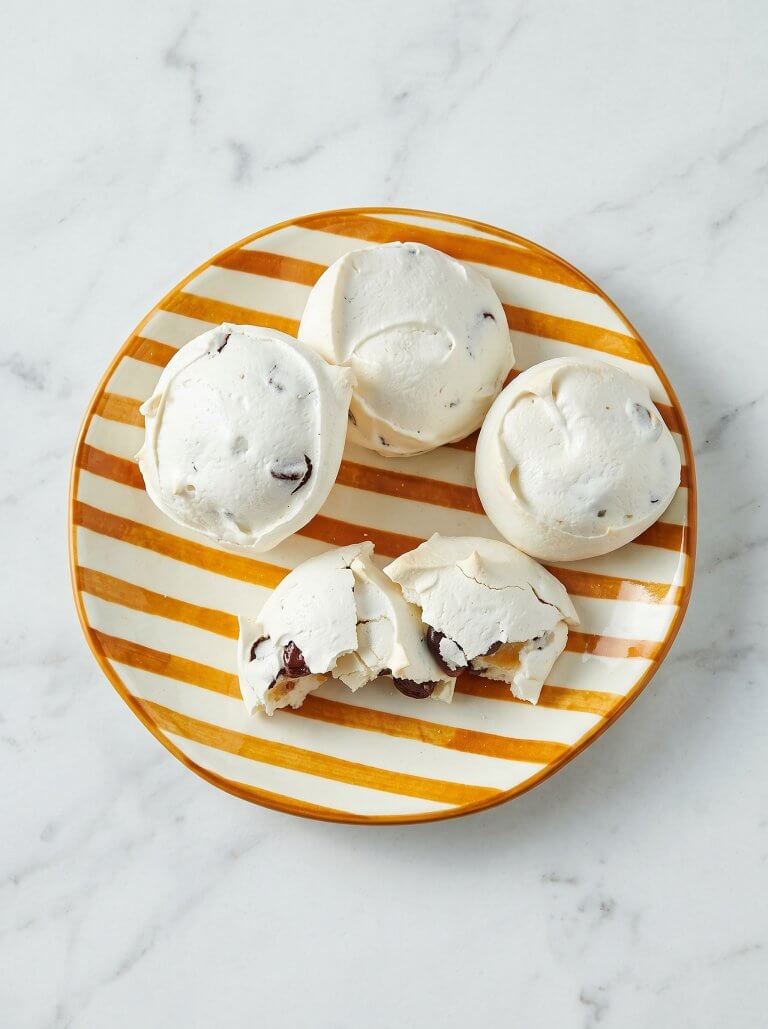
These classic French macarons are the kind of baking project that feels genuinely rewarding when that first tray comes out right. Finely ground almonds and confectioners’ sugar create delicate shells with crisp, paper-thin exteriors and soft, slightly chewy centers, while whipped egg whites give them their signature lightness. Once filled and sandwiched together, they become elegant little cookies that look every bit as special as they taste.
I especially like this collected recipe because the ingredient list is refreshingly short, and the technique is approachable once you know what to watch for. The real secrets are properly whipped egg whites, careful folding, and giving the piped shells enough time to develop a dry skin. They require patience, but most of that time is hands-off; perfect for a weekend baking afternoon when you want something a little more special.
The shells are naturally gluten-free, and you can completely change their personality with the filling; chocolate ganache, buttercream, fruit preserves, or lemon curd all work beautifully.

Love these delicate French macarons? Pin this recipe to your Dessert or Baking board on Pinterest so you don’t lose it!
Ingredients
3 large egg whites, about 3½ oz
¼ cup granulated sugar
1⅔ cups confectioners’ sugar
1 cup finely ground almond flour
Instructions
- Prepare the pan. Line a large baking sheet with a silicone baking mat.
- Whip the egg whites. Add the egg whites to the clean, grease-free bowl of a stand mixer fitted with the whisk attachment. Beat until foamy. Gradually add the granulated sugar, then continue beating until the meringue is glossy, fluffy, and holds soft peaks.
- Prepare the dry ingredients. Sift the confectioners’ sugar and almond flour together into a separate bowl. Discard any unusually large almond pieces that remain in the sieve.
- Fold the batter. Add the almond mixture to the meringue. Using a flexible spatula, fold gently but deliberately, working around the bowl and through the center. Start checking the consistency after about 30 folds.
- Test the consistency. Pipe a small 1½-inch test circle onto the prepared pan. The batter should settle into a smooth, even disk instead of retaining a pointed peak. If it stays peaked, fold the batter a few more times, then test again.
- Pipe the macarons. Transfer the finished batter to a pastry bag fitted with a plain round tip. Pipe evenly sized rounds onto the prepared baking sheet, leaving space between each shell.
- Rest the shells. Leave the piped macarons uncovered at room temperature for about 1 hour, or until the surfaces feel dry and no batter sticks to a fingertip when lightly touched.
- Preheat and bake. Preheat the oven to 140°C / 285°F. Bake for about 10 minutes, until the shells are set but have not browned.
- Cool completely. Leave the shells to cool for about 30 minutes before carefully removing them from the mat.
- Fill and sandwich. Pair shells of similar size. Pipe your favorite buttercream, ganache, jam, or other filling onto the flat side of one shell, then gently top with a second shell.
Cooking Notes
For the greatest precision, weigh the ingredients when possible: use 3½ oz egg whites, 1¾ oz granulated sugar, 7 oz confectioners’ sugar, and 3⅞ oz almond flour. Macarons are less forgiving of measurement differences than most cookies.
The folding stage, known as macaronage, is crucial. Under-mixed batter keeps pointed peaks and may bake unevenly; over-mixed batter becomes runny and spreads too far. Look for batter that flows slowly from the spatula and settles back into itself.
Make sure the mixing bowl and whisk are completely free of grease before whipping the egg whites. Even a small amount of fat can interfere with the meringue.
If you do not have a sifter, briefly pulse the almond flour and confectioners’ sugar together in a food processor, then proceed with the recipe.
Do not skip the resting period. The dry surface helps encourage the characteristic smooth top and ruffled “feet” as the macarons bake.
Nutrition
Yields: 16 macarons
Recommended Serving Size: 1 unfilled macaron
The nutrition estimate is based on the macaron shells themselves. Fillings are not included because the original recipe leaves the filling to the baker’s choice.
Estimated Nutrition per Serving
- Calories: 92 kcal
- Fat: 1.0 g
- Carb: 18.0 g
- Protein: 3.0 g
Recipe Science
French macarons are almond-based meringue sandwich cookies made primarily from egg whites, sugar, confectioners’ sugar, and finely ground almonds. The egg whites are aerated into a meringue, while the almond and sugar mixture supplies structure, sweetness, and the characteristic tender texture. The batter is carefully folded before being piped, rested, and baked at a relatively low 140°C / 285°F.
The technique depends on controlling both air and moisture. Whipping incorporates air into the egg whites, while folding removes just enough of that air to produce batter that spreads smoothly without becoming runny. Resting allows the exposed surface to dry. During baking, expanding air and steam push upward against this skin, helping create the characteristic smooth shell and ruffled base.
Macaron shells can be prepared ahead and stored in an airtight container once completely cool. Their neutral almond flavor also makes them flexible; fillings ranging from buttercream and chocolate ganache to fruit preserves can be used without changing the shell technique.
Dietary Notes & Health Alerts: The unfilled shells are naturally gluten-free when all ingredients are verified gluten-free. Based on the provided nutrition information, sodium and saturated fat remain well below the FDA’s 20% Daily Value threshold per serving. Sugar is a major component of macarons, however. Because the source recipe does not distinguish total sugar from added sugar, an exact FDA added-sugar percentage cannot be established from the supplied nutrition panel.
Why You’ll Love This Recipe
- Only Four Shell Ingredients: The basic macaron shells require egg whites, granulated sugar, confectioners’ sugar, and almonds.
- Classic Texture: Properly baked shells combine a delicate exterior with a tender, slightly chewy middle.
- Endlessly Customizable: Change the filling to create chocolate, vanilla, berry, citrus, coffee, or other flavor combinations.
- Naturally Gluten-Free: Almonds provide the structure instead of wheat flour.
- Worth Learning: Once you understand meringue consistency and macaronage, the same core technique can be adapted to countless macaron variations.
FAQ
- Can I use regular flour instead of almond flour? No. Almond flour is fundamental to the structure, flavor, and texture of French macarons. Wheat flour will not behave the same way.
- Why did my macarons spread too much? The batter was likely folded too far. Stop folding once it flows slowly and a piped test circle settles smoothly without becoming excessively thin.
- Why don’t my macarons have feet? Insufficient resting, overly wet batter, or oven-temperature issues are common causes. Make sure the shells develop a dry surface before baking.
- Can I make them ahead? Yes. Cool the shells completely and keep them airtight. Filled macarons are often refrigerated before serving, depending on the filling used.
- What filling works best? Buttercream and chocolate ganache are especially beginner-friendly because they are thick enough to stay neatly between the shells. Jam and curd can also work, but use them sparingly to prevent sogginess.
Conclusion
French macarons take a little patience, but that is part of what makes finally mastering them so satisfying. Don’t worry about making every shell perfectly identical; baking is a journey, and each batch teaches you something useful for the next one.
What filling would you sandwich inside your first batch; chocolate ganache, buttercream, lemon curd, or something fruity? Happy baking from my kitchen to yours!

Classic French Macarons With Crisp Shells and Chewy Centers
Course: Meringue CookiesCuisine: AmericanDifficulty: Easy16
macarons30
minutes10
minutes92
kcalDelicate almond meringue cookies with crisp shells and tender, chewy centers, ready for your favorite filling.
Ingredients
3 large egg whites, about 3½ oz
¼ cup granulated sugar
1⅔ cups confectioners’ sugar
1 cup finely ground almond flour
Directions
- Prepare the pan. Line a large baking sheet with a silicone baking mat.
- Whip the egg whites. Add the egg whites to the clean, grease-free bowl of a stand mixer fitted with the whisk attachment. Beat until foamy. Gradually add the granulated sugar, then continue beating until the meringue is glossy, fluffy, and holds soft peaks.
- Prepare the dry ingredients. Sift the confectioners’ sugar and almond flour together into a separate bowl. Discard any unusually large almond pieces that remain in the sieve.
- Fold the batter. Add the almond mixture to the meringue. Using a flexible spatula, fold gently but deliberately, working around the bowl and through the center. Start checking the consistency after about 30 folds.
- Test the consistency. Pipe a small 1½-inch test circle onto the prepared pan. The batter should settle into a smooth, even disk instead of retaining a pointed peak. If it stays peaked, fold the batter a few more times, then test again.
- Pipe the macarons. Transfer the finished batter to a pastry bag fitted with a plain round tip. Pipe evenly sized rounds onto the prepared baking sheet, leaving space between each shell.
- Rest the shells. Leave the piped macarons uncovered at room temperature for about 1 hour, or until the surfaces feel dry and no batter sticks to a fingertip when lightly touched.
- Preheat and bake. Preheat the oven to 140°C / 285°F. Bake for about 10 minutes, until the shells are set but have not browned.
- Cool completely. Leave the shells to cool for about 30 minutes before carefully removing them from the mat.
- Fill and sandwich. Pair shells of similar size. Pipe your favorite buttercream, ganache, jam, or other filling onto the flat side of one shell, then gently top with a second shell.