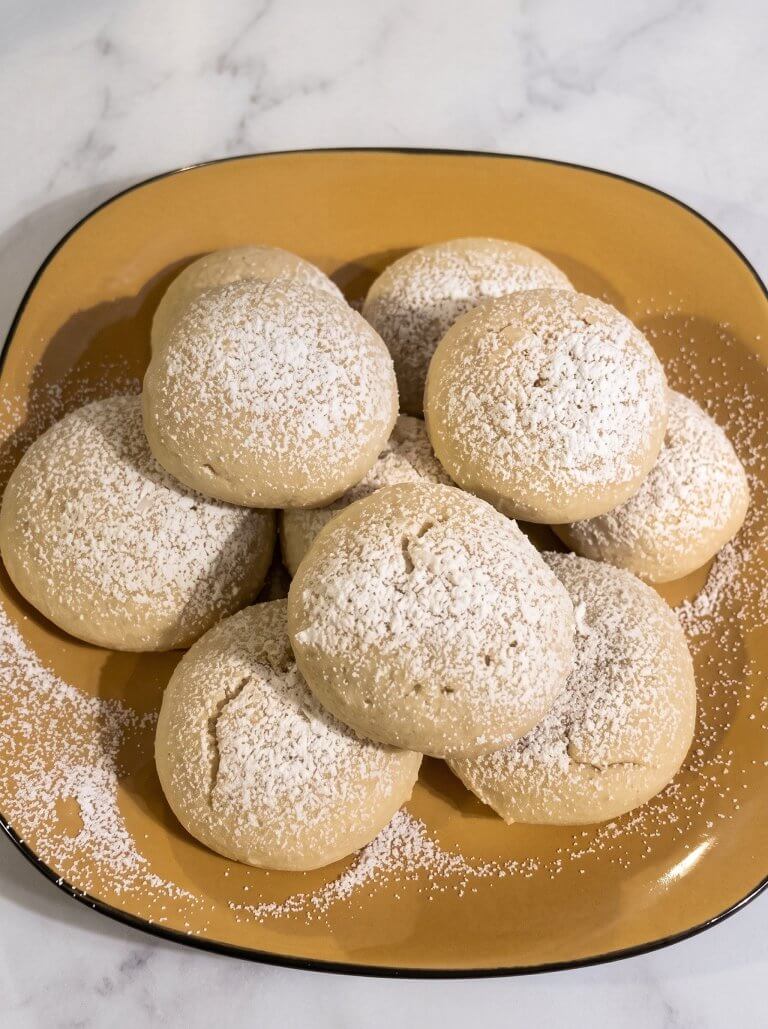
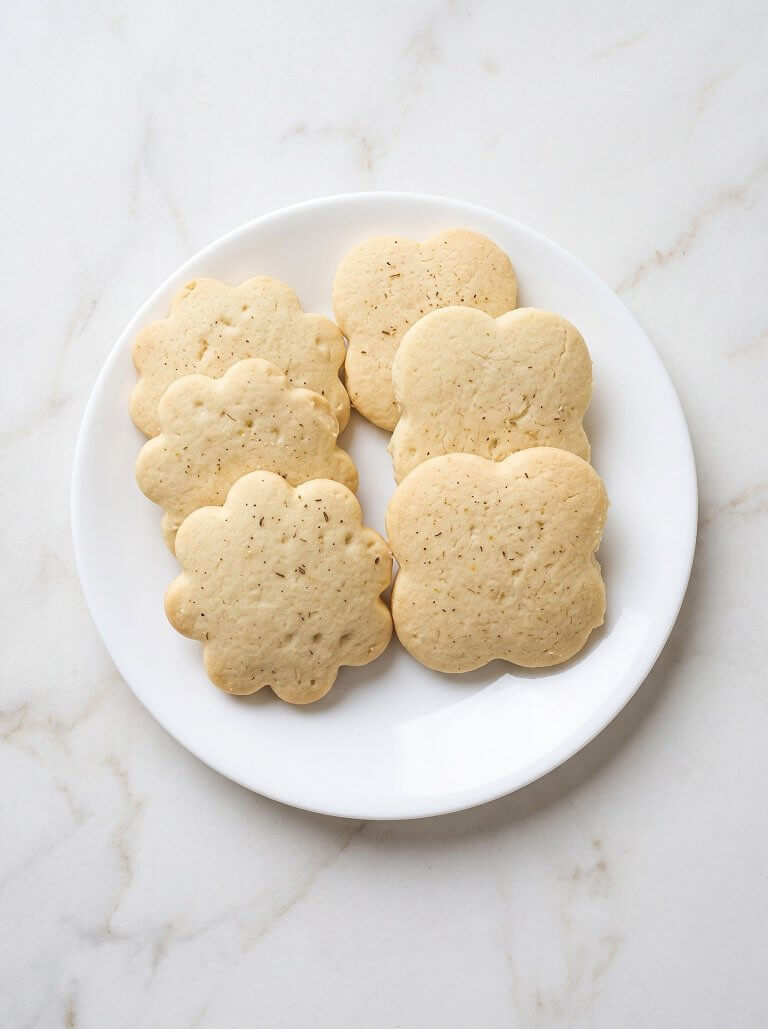
These almond shortbread cookies are the kind of old-fashioned treat I keep coming back to because the ingredient list is wonderfully simple, but the finished cookies feel special. Butter gives them a rich, melt-in-your-mouth crumb, while pure almond extract adds a sweet, fragrant nuttiness without requiring ground almonds. A light coating of sugar gives each cookie a delicate sparkle and a pleasantly crisp finish.
The dough needs a good two-hour chill, but the hands-on work is minimal. I especially like that the cookies hold their shape nicely after rolling and cutting, which makes them dependable for holiday trays, afternoon coffee, or a simple homemade gift. The low oven temperature also helps develop that classic shortbread texture without aggressively browning the cookies.
This is exactly the sort of collected recipe I appreciate as a busy mom; straightforward ingredients, make-ahead dough, and plenty of cookies to share. My family loves the buttery edges and almond aroma, especially when they’re still just a little warm from the oven.

Love this recipe? Pin it to your Cookie Recipes or Holiday Baking board on Pinterest so you don’t lose it!
Ingredients
1 cup salted butter, softened
½ cup granulated sugar
2 tsp pure almond extract
2½ cups all-purpose flour, sifted
⅓ cup granulated sugar, for coating
Instructions
- Cream the butter. In a large mixing bowl, beat the softened butter and ½ cup sugar with an electric mixer until pale, light, and fluffy. Beat in the almond extract until evenly incorporated.
- Make the dough. Gradually stir the sifted flour into the butter mixture with a wooden spoon or sturdy spatula. Mix just until a smooth, cohesive dough forms; avoid overworking it.
- Chill. Divide the dough in half and shape each portion into a flat disk. Wrap tightly and refrigerate for 2 hours, or until firm enough to roll cleanly.
- Prepare the oven. Preheat the oven to 150°C / 300°F. Have ungreased baking sheets ready.
- Roll and cut. Sprinkle the work surface lightly with sugar. Working with one disk at a time, roll the chilled dough to about ½-inch thickness. Cut into rounds with a 1½-inch cookie cutter.
- Shape. Arrange the cookies about 1 inch apart on the baking sheets. Press the end of a wooden spoon gently into the center of each cookie to create a small indentation without pressing completely through the dough.
- Bake. Bake for 25-30 minutes, until the cookies are set and just beginning to turn pale golden around the edges.
- Sugar and cool. While the cookies are still warm, lightly sprinkle them with or gently roll them in the remaining granulated sugar. Transfer to a wire rack and cool completely before storing.
Cooking Notes
Keep the butter softened but not melted. Butter that is overly warm can make the dough greasy and encourage the cookies to spread.
Chilling for the full two hours makes this rich dough much easier to roll and helps the cut cookies maintain their shape.
Shortbread should remain fairly pale. Look for light golden color around the edges rather than waiting for the entire cookie to brown.
If using unsalted butter, add ¼ tsp fine salt to the dough, as recommended in the original recipe.
For the most tender texture, stop mixing once the flour is incorporated. Excessive mixing develops gluten and can make shortbread tougher.
Store completely cooled cookies in an airtight container at room temperature.
Nutrition
Based on the full ingredient quantities, including the ⅓ cup decorating sugar, this recipe produces approximately 36 cookies. For a dessert serving, 2 cookies per serving is a practical portion, giving 18 servings total.
Butter loses a small amount of water during baking, while flour and sugar retain nearly all of their solids. The finished batch is estimated at roughly 28 oz, although actual baked weight will vary with moisture loss and how much decorating sugar adheres to the cookies.
Estimated Nutrition per Serving
- Calories: 217 kcal
- Fat: 10.4 g
- Carb: 29.0 g
- Protein: 2.2 g
Values are estimates and will vary with butter brand, flour measurement, cookie size, and the amount of coating sugar actually used.
Recipe Science
Shortbread relies on a high proportion of fat and relatively little liquid. Here, butter coats flour particles and limits gluten development, producing the characteristic short, crumbly texture. Creaming the butter with sugar incorporates a modest amount of air, while almond extract supplies concentrated aroma without materially changing the dough’s structure.
The two-hour refrigeration period firms the butter and hydrates the flour, making the dough easier to roll and helping the cookies retain their defined edges. Baking at the relatively low temperature of 150°C / 300°F allows moisture to evaporate gradually while limiting excessive browning. The result should be crisp at the edges, tender through the center, and only lightly golden.
For everyday use, the dough can be prepared ahead and kept refrigerated before rolling. Fully cooled cookies should be stored airtight to protect their delicate texture. Unsalted butter can replace salted butter when ¼ tsp salt is added to the dough.
Dietary Notes & Health Alerts: The estimated saturated fat from the butter is approximately 6.5 g per serving, about 33% of the FDA Daily Value of 20 g, so it qualifies as High. Added sugar is estimated at roughly 11 g per serving, depending on how much decorative sugar adheres, which remains below the 20% Daily Value threshold of 10 g only if less of the coating sugar is consumed; with the full listed sugar amount, it may be slightly above that threshold. A smaller one-cookie portion is a straightforward way to reduce both saturated fat and added sugar.
Why You’ll Love This Recipe
- Five Simple Ingredients: The basic dough needs only butter, sugar, almond extract, flour, and finishing sugar.
- Classic Shortbread Texture: Plenty of butter creates the delicate, crumbly bite that makes good shortbread practically melt on your tongue.
- Wonderful Almond Aroma: Just 2 tsp almond extract gives the entire batch a distinctive bakery-style fragrance.
- Make-Ahead Friendly: The required chilling time means you can prepare the dough earlier and handle the rolling and baking when you’re ready.
- Perfect for Sharing: One batch makes about 3 dozen small cookies, making them particularly useful for cookie trays, parties, and homemade gifts.
FAQ
- Can I use unsalted butter? Yes. Use the same quantity and add ¼ tsp salt to the dough.
- Why is my shortbread spreading? The butter may have been too warm, or the dough may not have chilled long enough. Keep the second dough disk refrigerated while working with the first.
- Why are my cookies tough instead of crumbly? The flour may have been overmixed or measured too heavily. Mix only until the dough comes together.
- Can I make the dough ahead? Yes. Wrap the dough securely so it does not dry out or absorb refrigerator odors, then roll it once it is firm but still workable.
- How do I know when shortbread is done? Don’t wait for deep browning. The cookies should look set with only light golden edges after about 25-30 minutes.
Conclusion
There is something especially comforting about a cookie this simple; butter, sugar, flour, and almond turn into a beautifully tender little treat with hardly any fuss. Cooking and baking are always a journey, so don’t be afraid to adjust the shape, sugar coating, or serving size and make this recipe part of your own traditions.
What would you serve alongside these almond shortbread cookies; coffee, tea, or a cold glass of milk?
Happy baking, from my kitchen to yours!

Almond Shortbread Cookies
Course: Butter CookiesCuisine: AmericanDifficulty: Easy18
servings15
minutes30
minutes217
kcalButtery, tender shortbread cookies flavored with pure almond extract and finished with a delicate coating of granulated sugar.
Ingredients
1 cup salted butter, softened
½ cup granulated sugar
2 tsp pure almond extract
2½ cups all-purpose flour, sifted
⅓ cup granulated sugar, for coating
Directions
- Cream the butter. In a large mixing bowl, beat the softened butter and ½ cup sugar with an electric mixer until pale, light, and fluffy. Beat in the almond extract until evenly incorporated.
- Make the dough. Gradually stir the sifted flour into the butter mixture with a wooden spoon or sturdy spatula. Mix just until a smooth, cohesive dough forms; avoid overworking it.
- Chill. Divide the dough in half and shape each portion into a flat disk. Wrap tightly and refrigerate for 2 hours, or until firm enough to roll cleanly.
- Prepare the oven. Preheat the oven to 150°C / 300°F. Have ungreased baking sheets ready.
- Roll and cut. Sprinkle the work surface lightly with sugar. Working with one disk at a time, roll the chilled dough to about ½-inch thickness. Cut into rounds with a 1½-inch cookie cutter.
- Shape. Arrange the cookies about 1 inch apart on the baking sheets. Press the end of a wooden spoon gently into the center of each cookie to create a small indentation without pressing completely through the dough.
- Bake. Bake for 25-30 minutes, until the cookies are set and just beginning to turn pale golden around the edges.
- Sugar and cool. While the cookies are still warm, lightly sprinkle them with or gently roll them in the remaining granulated sugar. Transfer to a wire rack and cool completely before storing.