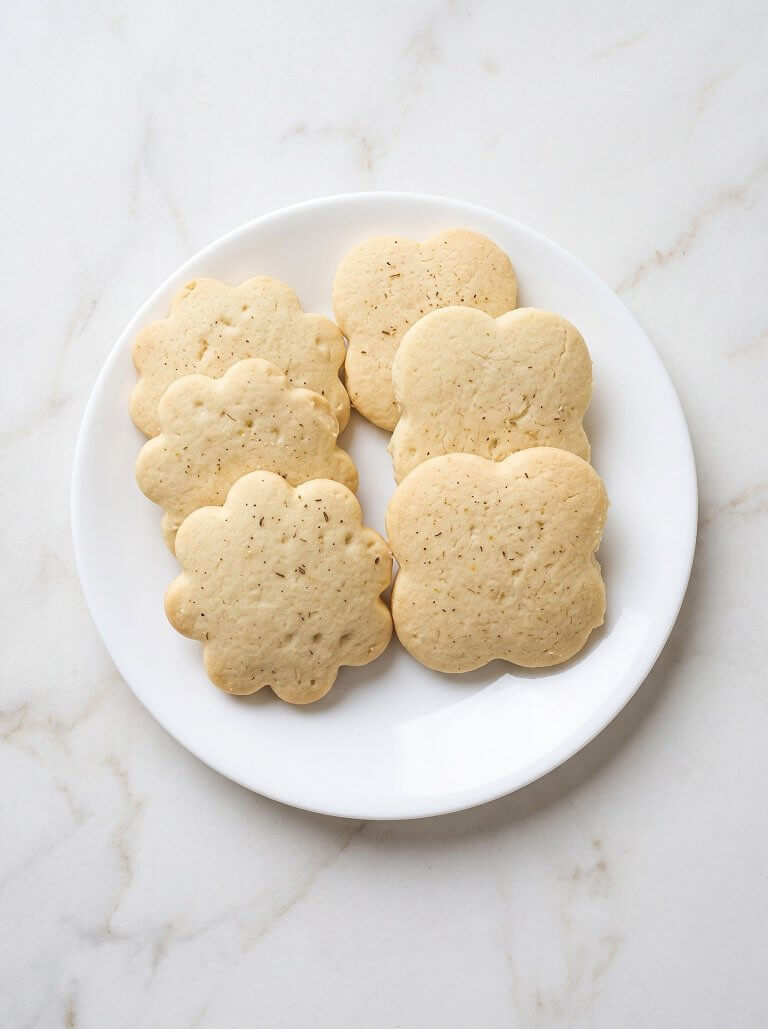
These Rosemary Shortbread Cookies are an old-fashioned treat with a surprisingly elegant flavor. Rich, buttery shortbread gets a delicate savory edge from fresh rosemary, while a light sprinkle of sugar keeps every bite firmly in dessert territory. The texture is tender, crisp, and pleasantly crumbly, with golden edges and the unmistakable aroma of butter and herbs.
This is exactly the sort of collected recipe I like keeping around because it proves that simple ingredients can produce something memorable. The rosemary may sound unusual in a cookie, but it mellows beautifully against the butter and sugar. Even better, the flavor develops after baking; I think these are especially lovely with coffee or tea after they’ve rested in an airtight container for a day or two.
They’re also practical for entertaining because you can make them ahead, and a batch yields about three dozen petite cookies.

Love this recipe? Pin it to your Cookie Recipes or Holiday Baking board on Pinterest so you don’t lose it!
Ingredients
1 ½ cups unsalted butter, softened
⅔ cup granulated sugar
2 tbsp fresh rosemary, finely chopped
2 ¾ cups all-purpose flour
¼ tsp salt
2 tsp granulated sugar, for topping
Instructions
- In a large mixing bowl, beat the softened butter and ⅔ cup sugar until pale, creamy, and fluffy.
- Mix in the finely chopped rosemary. Add the flour and salt, then mix just until a soft, cohesive dough forms. Avoid overmixing.
- Cover the dough and refrigerate for 1 hour. Chilling firms the butter and makes the dough much easier to roll and cut.
- Preheat the oven to 190°C / 375°F. Line baking sheets with parchment paper.
- Lightly flour your work surface and rolling pin. Roll the chilled dough to approximately ¼-inch thickness.
- Cut the dough into roughly 1 ½-by-2-inch rectangles. Arrange the cookies about 1 inch apart on the prepared baking sheets.
- Sprinkle the tops evenly with the remaining 2 tsp sugar.
- Bake for about 8 to 10 minutes, watching carefully toward the end. The cookies are ready when the edges are just beginning to turn golden.
- Let the cookies sit briefly on the baking sheet before transferring them to a wire rack to cool completely.
- Store completely cooled cookies in an airtight container at room temperature. For an even more developed rosemary flavor, let them rest for a day or two before serving.
Cooking Notes
Use fresh rosemary: Fresh rosemary provides a softer, more aromatic flavor than dried rosemary. Chop it very finely so you don’t end up with tough pieces in the cookies.
Don’t overwork the dough: Excessive mixing develops gluten and can make shortbread harder instead of delicately crumbly.
Watch the color: Shortbread shouldn’t become deeply browned. Look for pale tops with lightly golden edges.
Chill thoroughly: If the dough becomes sticky while rolling, return it to the refrigerator for 10 to 15 minutes.
Make them ahead: These cookies keep well for about one week in an airtight container at room temperature. Their herbal flavor becomes more integrated after the first day.
Nutrition
Based on a batch of approximately 36 cookies, one small cookie is an appropriate dessert serving. The butter contributes most of the calories and fat, while flour and sugar account for most of the carbohydrates.
Yields: 36 servings
Estimated Nutrition per Serving
Calories: 119 kcal
Fat: 8.0 g
Carb: 11.1 g
Protein: 1.0 g
Nutrition values are estimates and will vary with ingredient brands, dough thickness, and the exact number of cookies cut from the batch.
Recipe Science
Shortbread relies on a high proportion of butter combined with flour and sugar, with no eggs or chemical leaveners required. The result is a dense but tender cookie rather than a soft or cakey one. Fresh rosemary contributes aromatic compounds that pair particularly well with butter, while the relatively modest quantity of sugar allows those herbal notes to remain noticeable.
Chilling is important because it solidifies the butter and makes the soft dough easier to handle. Once the cookies enter the hot 190°C / 375°F oven, the butter melts, the flour structure sets, and the sugars begin browning around the exposed edges. Limiting mixing helps minimize gluten development, which contributes to shortbread’s characteristic crumbly texture.
These cookies are suitable for make-ahead baking because they can be stored in an airtight container at room temperature for about a week. The rosemary aroma becomes more integrated during storage. For variations, lemon or orange zest can complement the rosemary without substantially changing the baking method.
Dietary Notes & Health Alerts: Saturated fat is the primary nutritional consideration because the recipe contains 1 ½ cups of butter. An estimated serving is likely to contain roughly 5 g saturated fat, approximately 25% of the FDA Daily Value of 20 g; this qualifies as High per serving. Anyone limiting saturated fat for medical reasons should consider portion size carefully. Sodium is naturally low because unsalted butter is used, and added sugar per cookie remains well below 20% of the FDA’s 50 g Daily Value.
Why You’ll Love This Recipe
- Unexpected Flavor: Fresh rosemary gives classic buttery shortbread an aromatic, sophisticated twist.
- Beautifully Crumbly: A generous amount of butter creates the tender, melt-in-your-mouth texture good shortbread should have.
- Make-Ahead Friendly: The cookies keep for about a week, and their flavor is particularly good after a day or two.
- Simple Ingredients: Butter, flour, sugar, rosemary, and salt are all you need.
- Perfect With Coffee or Tea: Their restrained sweetness makes them especially good alongside a warm drink.
FAQ
- Can I use dried rosemary? Fresh rosemary is preferable. If necessary, use about 2 tsp dried rosemary, crush it finely, and expect a somewhat stronger, less fresh herbal character.
- Why is my shortbread dough so soft? That’s normal before chilling because of the high butter content. Refrigerate it for the full hour, and chill it again briefly if it becomes difficult to roll.
- Can I make the dough ahead? Yes. Wrap it tightly and refrigerate it overnight. Let it sit at room temperature briefly if it becomes too firm to roll.
- Why did my cookies spread? The butter was probably too warm. Keep the dough cool, and consider chilling the cut cookies for 10 minutes before baking if your kitchen is particularly warm.
- Can I add another flavor? Yes. Finely grated lemon zest is especially good with rosemary. Orange zest is another easy option.
Conclusion
These Rosemary Shortbread Cookies are proof that an unusual little ingredient can turn familiar shortbread into something special enough to remember. Don’t be afraid to adjust the rosemary or add a little citrus zest; cooking and baking are journeys, and the recipes worth keeping often become our own over time.
I’d love to know: Would you serve these with coffee, afternoon tea, or tuck them into a holiday cookie box? Happy baking, friends!

Rosemary Shortbread Cookies
Course: Butter CookiesDifficulty: Easy36
cookies1
hour20
minutes15
minutes119
kcalCrisp, buttery shortbread cookies flavored with fresh rosemary and finished with a delicate sprinkle of sugar.
Ingredients
1 ½ cups unsalted butter, softened
⅔ cup granulated sugar
2 tbsp fresh rosemary, finely chopped
2 ¾ cups all-purpose flour
¼ tsp salt
2 tsp granulated sugar, for topping
Directions
- In a large mixing bowl, beat the softened butter and ⅔ cup sugar until pale, creamy, and fluffy.
- Mix in the finely chopped rosemary. Add the flour and salt, then mix just until a soft, cohesive dough forms. Avoid overmixing.
- Cover the dough and refrigerate for 1 hour. Chilling firms the butter and makes the dough much easier to roll and cut.
- Preheat the oven to 190°C / 375°F. Line baking sheets with parchment paper.
- Lightly flour your work surface and rolling pin. Roll the chilled dough to approximately ¼-inch thickness.
- Cut the dough into roughly 1 ½-by-2-inch rectangles. Arrange the cookies about 1 inch apart on the prepared baking sheets.
- Sprinkle the tops evenly with the remaining 2 tsp sugar.
- Bake for about 8 to 10 minutes, watching carefully toward the end. The cookies are ready when the edges are just beginning to turn golden.
- Let the cookies sit briefly on the baking sheet before transferring them to a wire rack to cool completely.
- Store completely cooled cookies in an airtight container at room temperature. For an even more developed rosemary flavor, let them rest for a day or two before serving.